How To Avoid Hidden Tax Traps In Your Real Estate Deals
Too often these avoidable oversights are discovered after closing
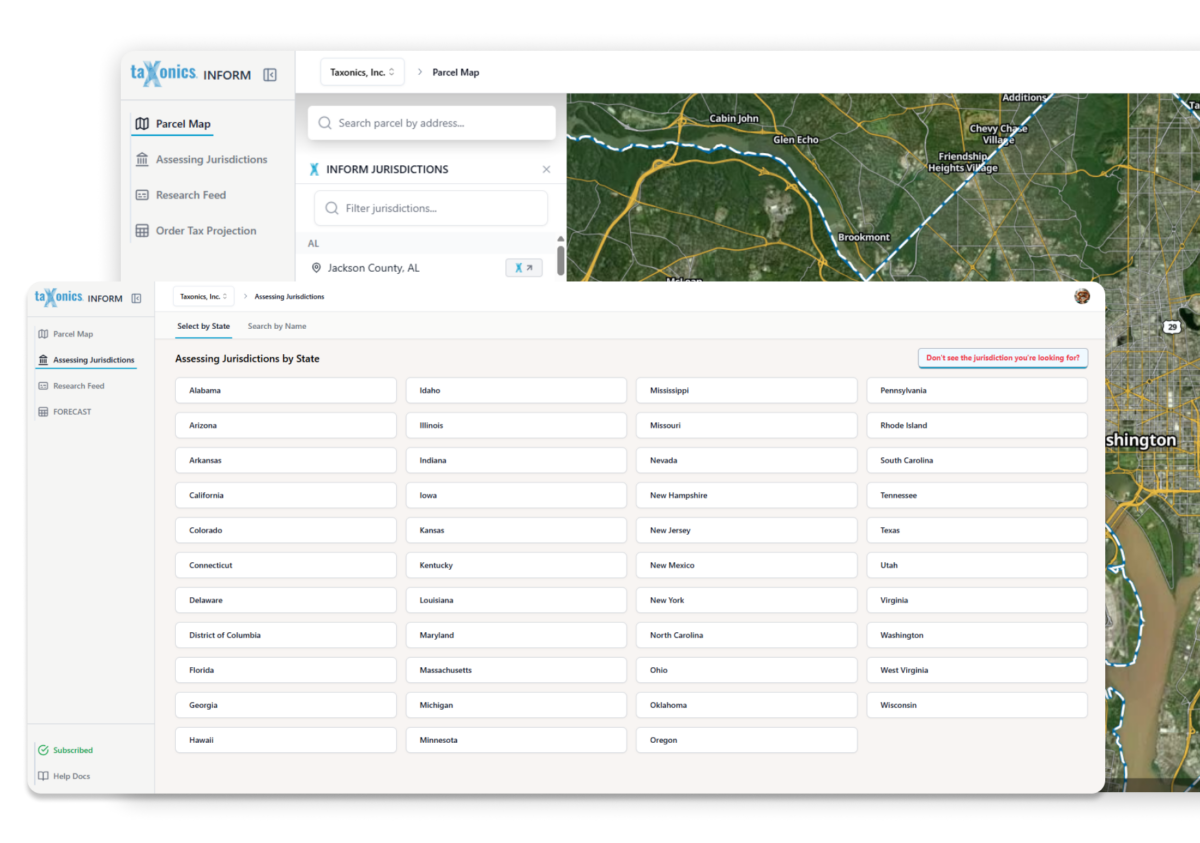
The nuances of local jurisdictions make real estate taxes hard to understand. Whether underwriting a new deal, entitling a property, or improving the bottom line on an existing asset, the wealth of professionally sourced and independently vetted information provided by INFORM will help you avoid tax traps.
Property taxes are the industry’s most overlooked risk
Ask a sophisticated real estate investor for the details behind any of a deal’s big numbers, and they will know exactly how the cap rate, debt service, and NOI, were calculated. Then ask them to explain their property tax assumptions and you’ll often be met with silence.
That silence is expensive.
Property taxes are among the largest operating expenses, yet the information to manage them intelligently is scattered. Thousands of jurisdictions across the United States have their own rules regarding how and when to assess a traded or developing property.
This is why you need INFORM. Our platform provides data, research, and sources that help commercial real estate professionals understand, manage, and reduce their real estate taxes. By uniting decades of real estate tax expertise, mountains of quality commercial real estate data, and powerful analytics, we’re ready to solve your toughest real estate tax problems.
A Due Diligence Blind Spot
Unlike a debt stack modeled to the basis point or a stress-tested rent roll, property tax assumptions often come from a broker’s offering memorandum, a back-of-the-envelope estimate, or whatever was on the last readily available tax bill.
This is not negligence. This is a data problem. Clear and validated property tax information simply hasn’t been easy to find.
For national investors deploying capital across multiple markets, the complexity multiplies fast. The result is that even experienced sponsors routinely underwrite deals with tax assumptions that are directionally correct but materially wrong, and don’t find out until the new assessment arrives after closing.
“With Taxonics’ due diligence tools, we were able to clearly define the tax picture for our multi-phase, mixed-use development in the Northeast. Through this detailed analysis, we were able to put our partners minds at ease identifying exactly what the development’s taxes would be during each phase of the build.”
The View Through Rigorous Tax Due Diligence
Every transaction’s underwriting should be approached with a set of systemic questions:
- What assessment methodology is likely to be applied to this property, and what relevant factors will be used in determining market price?
- How does the current assessment compare or differ from market and why?
- When is the next assessment, and are there reassessment triggers or phase-ins in the interim?
- Have recent appeals in this jurisdiction been successful and what existing appeal rights might transfer to the new owner?
- How will planned improvements, a lease-up, or a change in use affect the assessment?
Answering these questions for a single transaction takes time. Doing it across a portfolio or completing it within a deal timeline historically requires either expensive external advisors or an internal tax team with deep local knowledge across a vast expanse of markets.
Neither option scales well for most organizations.
From Expertise to Infrastructure
The good news is that the underlying knowledge of why and how real estate is assessed can be systematized. Continuously updated, searchable, and most importantly available data at the moment the deal team needs it.
This shift from bespoke advisor to accessible infrastructure is happening in real estate tax intelligence today. Knowledge that once required a specialist can now be organized, vetted, and available on demand, allowing even the most junior team member to complete property tax research in minutes rather than hours.
In an economic environment where every edge matters, property tax intelligence is an increasingly important differentiator. And this isn’t limited to transactions. Yes, investors who underwrite taxes accurately can see deal opportunities that others pass on, but farther down the real estate life cycle asset managers who actively manage their assessed values improve NOI without adding a single tenant.
The firms that will lead the next real estate cycle are already building every competitive advantage into their infrastructure including intelligent property tax research.
The data exists. The expertise exists. The question is whether your team has access to it.
Real Property
Tax Knowledge
At Your Fingertips
- Professional Grade. Developed as an in-house tool for the real estate tax experts at Cavalry Real Estate Advisors, now available to you.
- Continuously Updated. Continually adding new jurisdictions and insights – all vetted by practicing tax professionals.
- Time Saving. Easy-to-navigate and search environment gives your team time back to focus on mission-critical tasks.
- No IT or Hosting Requirements. Cloud-based application: access anytime, anywhere with no storage or hosting requirements.
No credit card required – Full access for 3 days – Cancel anytime